


Ask anyone whether their company supports work-life balance and you get the policy answer. Ask how last week actually went and you get a different one.
The distance between those two answers is the real state of work-life balance in most companies today, and it is not closing.
Companies have added flexibility, no-meeting blocks, wellness budgets, mental health days, and right-to-disconnect guidance. People still describe work bleeding into everything. Something between the intent and the experience is failing, and another policy does not fix it.
Gallup’s State of the Global Workplace: 2026 report, which covers data collected through 2025, found that employee wellbeing improved for the first time in three years, rising a single point to 34%. Daily stress stayed above pre-pandemic levels through the same period. Things got slightly better and felt no lighter. That is the surprising part.
This Instahyre Roundtable brings two talent leaders together to talk about what balance actually looks like now, and what they have stopped believing about it.
The Policy Is Not The Experience
Most balance initiatives are designed at the company level and lived at the team level. A generous policy dies quietly inside a team where nobody uses it, and no HR dashboard picks that up.
Swati Khanna, who leads talent for India at Cloudflare, and Rachit Malik of Schneider Electric go straight at that gap. Both operate in organisations with genuinely good policy on paper. Both are candid about how unevenly it lands.
What The State Of Work-Life Balance Looks Like Inside Teams
Six things come up in this conversation that are worth sitting with.
Flexibility solved location, not load. People can choose where they work. The volume of work followed them there. Autonomy over place is not the same as control over time.
The manager layer decides everything. Team norms override company intent. If a manager replies at 11pm, the policy that says nobody has to reply at 11pm is decorative.
Boundaries are a leadership behaviour, not a benefit. What leaders do with their own calendars teaches more than any announcement. People read behaviour, not policy documents.
Candidates are asking a different question than you think. When someone asks about flexibility in an interview, they are usually asking whether the person interviewing them takes leave and whether it costs them anything.
Some tradeoffs are real and worth saying out loud. There are roles and company stages where ambition and balance genuinely pull against each other. Pretending otherwise damages trust more than admitting it.
Wellbeing spend can hide the problem. A wellness budget is easier to approve than a staffing decision, and it can absorb the pressure to fix what is actually causing the strain.
What Talent Teams Can Actually Influence
Not much of this sits inside HR’s direct control, which is the uncomfortable part of the conversation. Workload is set by business planning. Deadlines are set by customers. Manager behaviour is shaped by what gets rewarded three levels up.
What talent teams can influence is narrower and more useful: what gets promised during hiring, what managers are trained to model, and whether the organisation has any honest measure of the state of work-life balance beyond an annual engagement score. Both speakers get specific about which of those levers moved something in their own organisations and which ones did not.
Who Should Watch This
HR and talent acquisition leaders, people managers, and anyone writing or defending workplace policy who suspects the policy is not landing the way it reads.
If you are being asked to improve retention or employer brand without a change in workload, this session is a useful hour. It sits alongside two related Roundtable conversations: The Unbundled Employee Experience, on personalising benefits without creating chaos, and Re-Architecting Leadership, on the shift from control to collaboration in how teams are run.
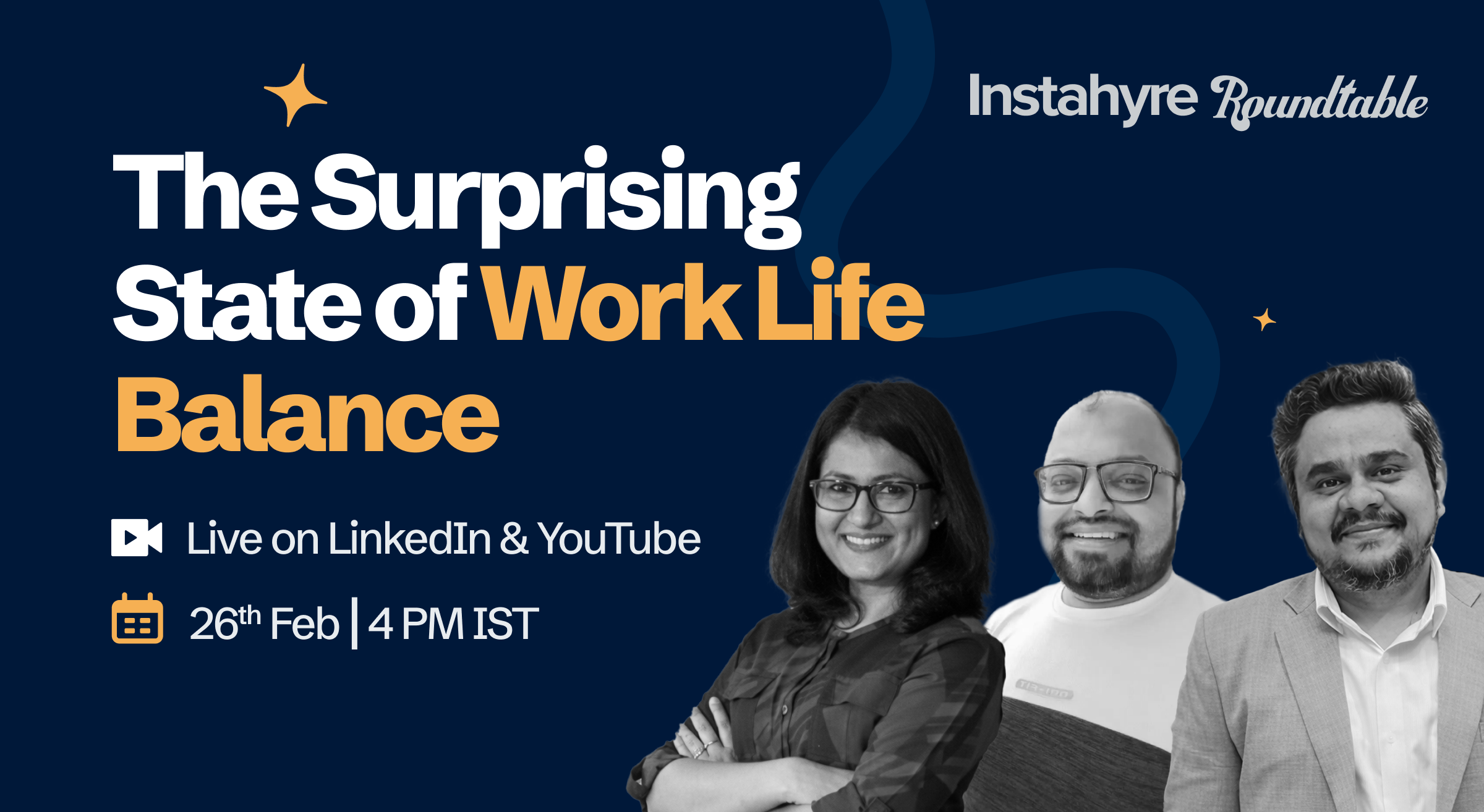
Event Details
Date: 26th February 2026 Time: 4:00 PM IST Stream: LinkedIn Live and YouTube Live Speakers: Swati Khanna, India Talent Leader, Cloudflare; Rachit Malik, Deputy General Manager, Schneider Electric Host: Sarbojit Mallick, Co-founder, Instahyre
Watch the full conversation on demand.

More on employer branding

Ready to see Instahyre in action?
Ditch the mass emails, job ads, and manual resume screening. Source, Engage and Interview using AI
Get Started for FreeWant to be a part of Exclusive, Invite - only Recruitment events?
Get notified when new stories and insights are released.
You always have the choice to unsubscribe.
