


Employee expectations are clear enough. People want to know where their career is going, whether the company is stable, and what the next two years look like.
Most leaders right now cannot honestly promise any of the three.
That is not a failure of leadership. It is a condition of the market. Roadmaps get rewritten mid-year. Headcount plans move. A career path mapped in January looks different by June. The problem is that employee expectations were set during a period when those promises were safe to make, and nobody has renegotiated them since.
Randstad’s Workmonitor 2026, based on 27,062 workers surveyed across 35 markets in October 2025, found that 95% of employers expected business growth in the year ahead while only 51% of talent shared that optimism. The same research found trust in senior leadership declining, with 72% of workers leaning harder on their direct managers to navigate the uncertainty.
That is the gap this Instahyre Roundtable sits inside.
The Cost Of Promising Anyway
The easiest thing a leader can do is make the promise and hope conditions cooperate. It buys quiet this quarter and costs trust for years, because employee expectations set on a promise that fails are harder to reset than expectations that were never inflated.
Aditi Mudholkar, who heads HR for India at Cyware, and Sungkriityayann Khaann of Extramarks take the opposite approach. Both work in organisations where plans genuinely do change, and both have decided that naming the uncertainty out loud beats managing around it. This conversation is about what they say instead, and how teams actually respond to being told the truth.
Where Employee Expectations Have Actually Shifted
Six things surface in this session that are worth thinking about before your next skip-level.
People stopped believing the five-year plan. Not out of cynicism. They have watched enough reorganisations to know that a long career map is a hope, not a commitment. Selling one anyway signals that you are not paying attention.
Stability now means information, not guarantees. Employee expectations here are lower than most leaders assume. Nobody expects a promise that layoffs will never happen. They expect to hear about pressure early rather than reading it in an announcement.
Growth conversations shifted from titles to capability. When the org chart is unstable, what people want from you is the work that makes them more employable, which is a promise you can actually keep.
Managers absorb what leadership will not say. Silence at the top does not disappear, it relocates. It lands on managers who have to answer questions with information they were never given.
Trust is built by the promises that held. Employee expectations are shaped less by what gets announced and more by whether last year’s commitments survived contact with reality.
The exit interview arrives too late. By the time someone explains what they expected and did not get, the window to renegotiate employee expectations closed months earlier.
What HR Owes People When Plans Change
The obligation does not disappear just because the commitment did. Both speakers get specific about the difference between a promise and an obligation, and what a talent function still owes people when the plan it hired them into no longer exists.
That distinction matters commercially too. Employee expectations that are set accurately during hiring cost far less to manage later than expectations set generously and corrected in month seven.
Who Should Watch This
HR and talent acquisition leaders deciding how much to say during a period of change. Anyone who sets employee expectations at offer stage and then has to defend them a year later. People managers fielding questions they have no answers to. Anyone whose employer brand promises something the business cannot currently underwrite.
The session pairs well with two other Roundtable conversations: Quiet Growth In A Loud Hiring World, on the shift toward disciplined and honest growth, and Are we hiring for comfort or for growth?, on how leaders make calls when the safe option and the right option diverge.
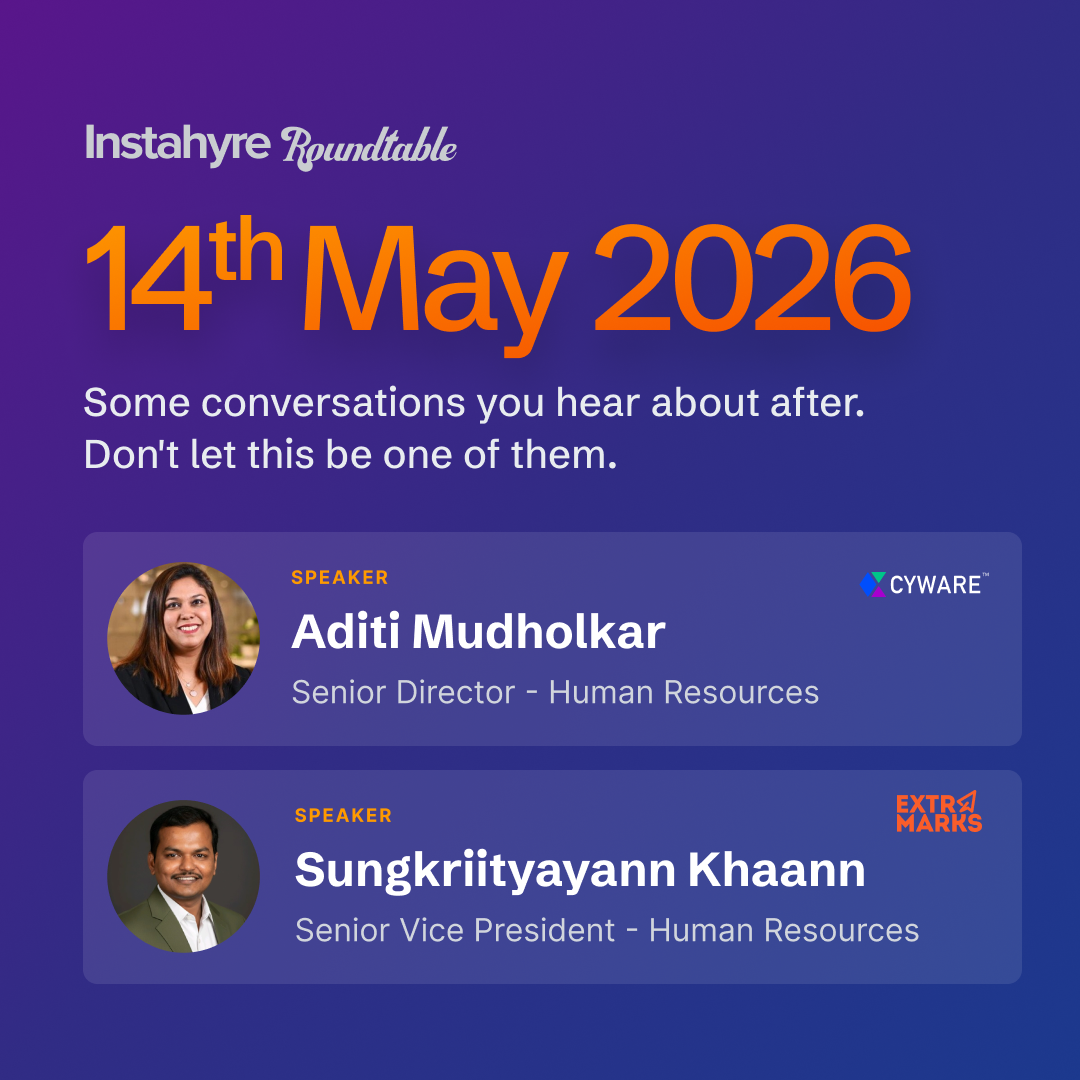
Event Details
Date: 14th May 2026 Time: 4:00 PM IST Stream: LinkedIn Live and YouTube Live Speakers: Aditi Mudholkar, Head of Human Resources – India, Cyware; Sungkriityayann Khaann, SVP – HR, Extramarks Host: Sarbojit Mallick, Co-founder, Instahyre
Watch the full conversation on demand.

More on employer branding

Ready to see Instahyre in action?
Ditch the mass emails, job ads, and manual resume screening. Source, Engage and Interview using AI
Get Started for FreeWant to be a part of Exclusive, Invite - only Recruitment events?
Get notified when new stories and insights are released.
You always have the choice to unsubscribe.
